Sunday, November 06, 2005

A Life Well-lived


Roodi
April 15, 1998 - November 2, 2005


Roodi left us last Wednesday. It happened all so quickly. Now I still can't imagine that he will never come to work anymore. We are all very saddened by the loss of a very special member of the lab.


Roodi was our advisor's Vizsla (Hungarian hunting dog). Ever since he was a little puppy, he started coming to work daily. He was well trained. He knew he should never come inside the lab, so he stayed in the office on the carpet, most of the time. He brought us so much love and affection, and received so much attention from us in return. He had a certain routine: he would come to work early in the morning, and demand people to play with him for about 5 minutes. Then he would go to sleep in his kennel. He would wake up for his noon walk, waiting impatiently for Steve to come take him. He would basically take himself on the walk route (he needed help getting out of the building, though), running all the time only to stop at certain trees to jump at the squirrels, and to point at the corner of Walker Memorial to some imaginary animals. Coming back from his walk, he would play a rope toy called "Kung" for a long time, shaking the rubbery Kung so violently by the rope that it clashed with his skull while he ran around the office constantly avoiding all the furniture. He was just full of life. Though there were signs that he was getting old, such as the appearance of white hair on his chin, cauliflower-like skin tags popping out here and there, and worse, cysts on his chest and belly (which the vets said were benign). But he was only seven and a half, which was about 52-years old for a person. No one had expected him to go so soon.
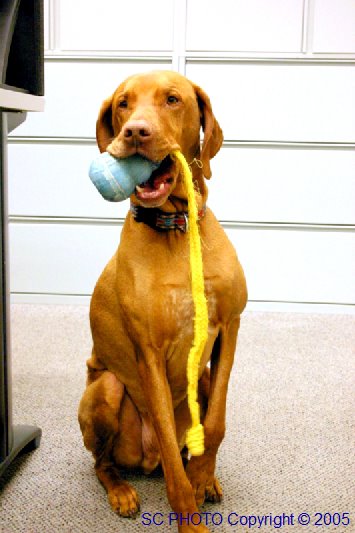
Roodi was smart. He saw people putting on their jackets he would think that they would take him out for a walk. We tried not to put on our jackets in front of him. He understood several words such as "go out", "walk", "treats", "Kong", "ball". We would not say "go out" loud in the lab. Instead we say "go O-U". We couldn't even say "T", because he would associate that with "out". If you asked him "do you want...?" he would tilt his head sideways and raise his eyebrows as if expecting something. Sometimes he whimpered and whined to get attention. He hated fire drills. The fire alarm must hurt his ears. He would cry so sadly and loudly and I believe everybody in the building would hear his cry. His cry alone would get everyone out safely.

Though he was a hunting dog and he had the instinct to point and chase animals, Roodi was very timid. He was afraid of almost any new things to him, from a small magnet lion to a large inflated rhino. He was even afraid of ice buckets. Sometimes he would overcome his fear and become fond of certain things, or even become overly possessive, like what happened to the magnet lion or the mouse cover in the shape of a mouse. But sometimes he would run away as fast as he could to take refuge in his safe haven - his own kennel. That usually cracked us up.
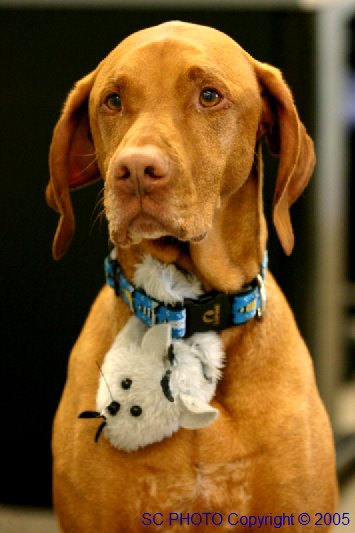

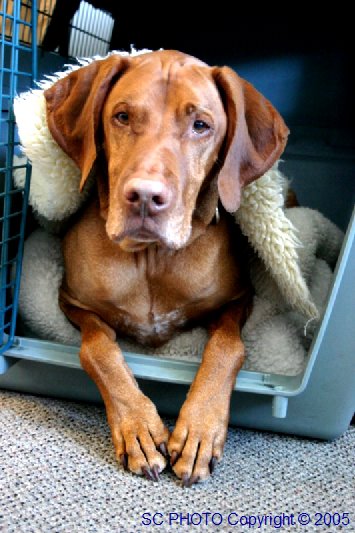


Roodi loved people. Though he would bark at strangers and sometimes he was a racist (he especially liked to bark at young Asian females), he would get to know them very fast. If people got down to his level, he would not hesitate to bestow on them his kisses. He rolled over for certain people (he was very selective on this) and asked them to rub his belly. I heard that this was the ultimate show of submissiveness of dogs. That did not necessarily mean that Roodi was submissive. Most of the times he was, but he changed a lot since Strider arrived a year and a half ago. Strider is the younger Vizsla. Roodi was very dominant to Strider. Roodi bond to his caregiver very quickly. I took care of Roodi and his older sister for about a week around one Christmas. I left them for two hours on Christmas day. I came back home he was not in the living room where he used to be. He dashed into the living room hearing me and I was wondering where he was while I was away. I saw that my bed looked a little messy though I made my bed that morning. I could faintly make out the outline of a dog and four paw prints. I touched the bedding and it was still warm! It turned out that Roodi slept in my bed because he couldn't find me in the house but wanted to get closer to me. My bed, which had my scent, was the closest thing he could find! What a sweet dog!


To me, Roodi was a very special dog. He was my most loyal photography subject. I went through all the Roodi pictures I have taken over the years in the last couple of days. I was surprised that it came to a total of 2.5G JPG images. He had certainly helped me improving my skills.

It was so shocking when Dave told me that Steve postponed his trip because Roodi was very sick last Wednesday morning. The whole lab was very disheartened. I knew Roodi was in surgery and they found cancer on his liver and spleen. I thought that they would just remove the tumors and Roodi would recover at Angell's and come back to work later. But he didn't make it.

At least Roodi didn't suffer long. Just Tuesday he was still running around the campus like any other day. He even successfully begged Wendy and I into giving him a bonus walk around 1:30pm that afternoon. Like any other walk I took him on, he got so many compliments from people for his boundless energy and superb ball-catching ability. It was such a nice day: temperature in the 70s, only two days after two inches of snow. Roodi had the sense for a good day. I was so glad that I let him win, let him go on his usual walk instead of playing ball right downstairs. I will always remember him as an energetic dog that loved people's attention and released our stress and tension.

Rest in peace, Roodi. I will miss you a lot.

Saturday, October 29, 2005

第一场雪

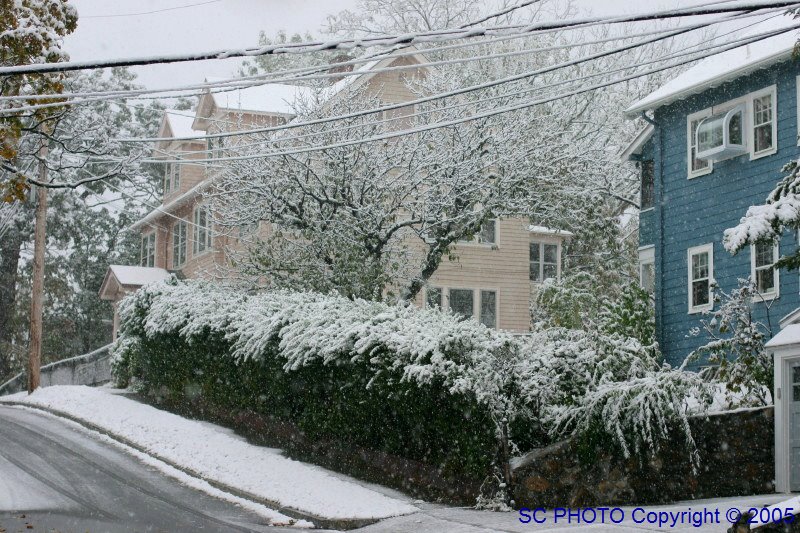
今年的第一场雪来得很早,而且来势汹汹。短短两小时就积了又湿又沉的两寸。忽然间发现原来好多树已经落尽了叶子,但有更多还是绿叶满枝头,除了几棵刚变黄的枫树。今年的红叶真的很奇怪。

下午二时开始下,到五点钟:


可怜的玫瑰:

Two Evenings with the Orchestra (Part I)

The Orchestra was the Boston Symphony Orchestra. Thanks to Jenny and the Symphony's educational program, I recently have attended two Tuesday concerts for free. It was not my first time with the Orchestra, but every time it always turned out exciting. What was different of these two Tuesday concerts was that there were quite a proportion of young audience. It was nice too see young faces at a concert hall for serious music.

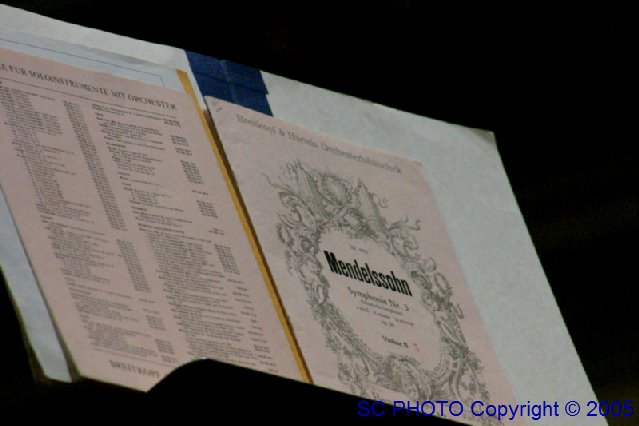
The first concert I went was an all-German concert featuring Weber, Schumann, and Mendelssohn, conducted by the young German conductor Jens Georg Bachmann. The three pieces were all typical Romanticist music with very beautiful melodies and no restrains on emotions. You can hear an excerpt of Weber's Overturn to Oberon here (by the London Classical Players). It was a very happy and festival opening for an evening of music. The second piece was Schumann's Piano Concerto in A minor, which was first performed by his wife, celebrated pianist Clara. We had Andreas Haefliger as our soloist that night. The last piece was Mendelssohn's Symphony No. 3, Scottish. The triumphant last theme was ringing in my head for a long time after the concert (so much better than a stupid Taiwanese pop song I picked up earlier that day). Coincidently I heard his Symphony No. 4 on radio that weekend. Both are very beautiful symphonies.
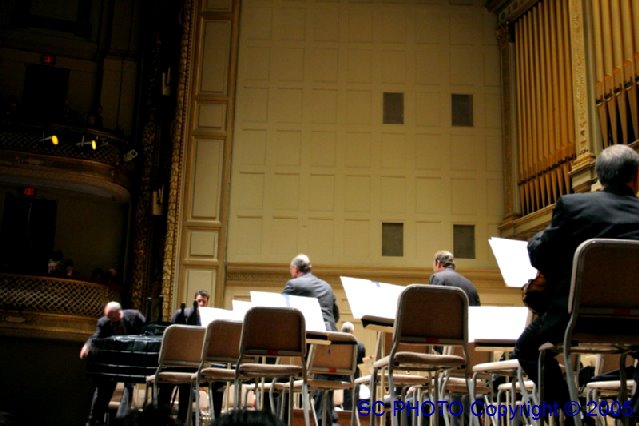
Now let's take a tour in the Symphony Hall (more than 100 years old!). Above the stage, you see this (it says Beethoven):


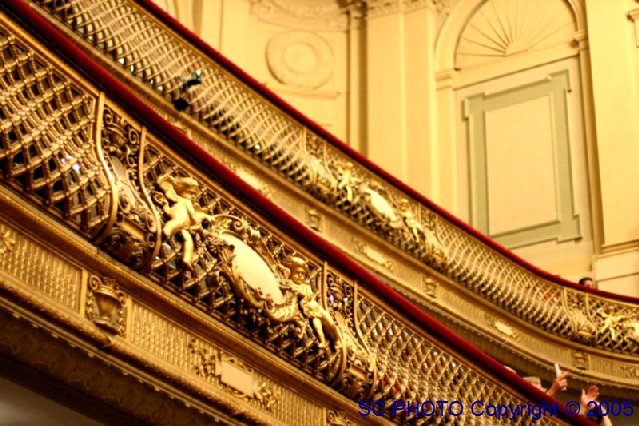
The balconies:


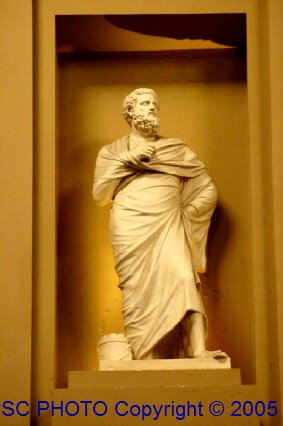
And sculptures on the walls:


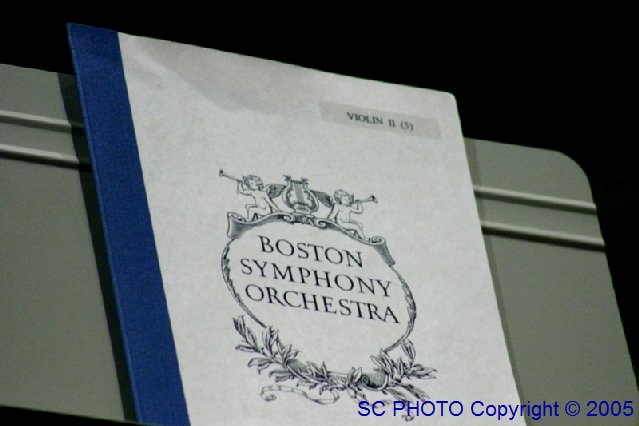
Oh, I was sitting in D1, four rows behind the stage. I can see this: Scores for second violins on row 5.


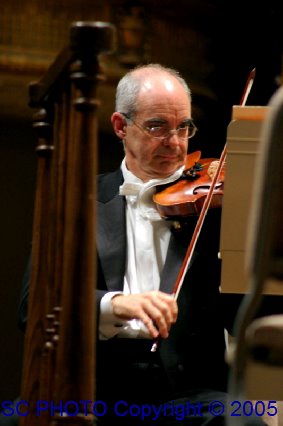
Concertmaster (leader of first violins) Malcolm Lowe practicing before concert:


Even the piano movers wear suits:


Pianist Andreas Haefliger:

Tuesday, October 25, 2005

Rain, Rain, and More Rain to Come

No doubt it will make the wettest October in many years. We have had so many rainy days this month. Apart from the 9 consecutive days of no-sun about 10 days ago, we are now in the fourth day of such a stretch, again. What's more, this is a nor'easter. I hate the word "nor'easter". That means it is a storm that would linger on for a long time. So this one won't stop until sometime tomorrow. It is so windy and wet outside. It is just nasty.

I am going to the Symphony Hall tonight. What a program it will be! It's Sibelius' violin concerto and Shostakovich's symphony No. 8 (completed in 1943 during WWII). The latter is supposed to be excessively gloomy and despairing. It doesn't seem to be the best choice for this kind of weather. But Shostakovich himself said that his No. 8 was about beauty and affirmation: "Life is beautiful. All that is dark and depressing will disappear, depart, and the beautiful will reign."

Saturday, October 15, 2005

Glass Pumpkins

Though it is colder and wet after 9 consecutive days of rain (still going), it does not feel like fall yet. Normally at this time of the year, we would see colorful foliage already. Maybe not in our backyard, but at least we could go north or west a little bit to enjoy the red and yellow display. Now it is soaked wet everywhere, I feel like going nowhere.

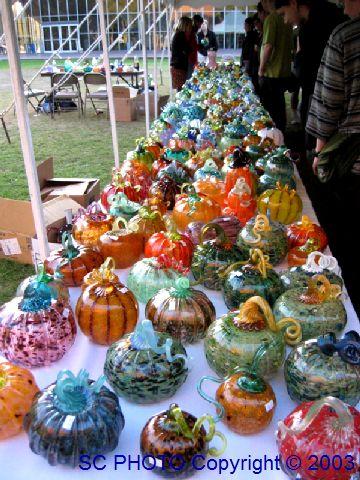
To cheer myself up, I found photos of glass pumpkins I took two years ago at the preview to the sale. I missed this year's annual glass pumpkin sale, not that I could afford buying anything (the cheapest price tag: $25), but I really wished to be able to take better pictures. The sale started at 10am. People came around 9am to get close to their favorites. I arrived at 4pm only to see a dozen or so left on the lawn. Oh well, there is always next year.


The Great Glass Pumpkin Patch


Close Up


My Favorite Pumpkin
Mmm, $155!

天漏啦

雨这样不停地下,已经是第九天了。下得新英格兰都发大水了,树叶儿也似乎推迟变色儿了。气象预报说今天下午可能会见太阳,怎么看不出来呢?九天没见太阳了,弄得人都很压抑,连实验室的宠物狗Roodi都病倒了。天快晴吧。

Sunday, October 09, 2005

Cooks and Bakers 本周新尝试

There is an interesting article in this week's Dining In section of NY Times about the difference between cooks and bakers. I can't agree less with the author. It looks to me cooks just "invent" meals from whatever they have on hands, while to be a successful baker, you have to follow recipes. No invention or impromptu allowed, not until you have done a lot of baking.

I consider myself a cook. I can cook delicious dishes. One of my dishes won me an award. Seriously. And I have only once participated in any cooking competition in my whole life, ever. On the contrary, I'm not much a baker at all. So when I received a 2kg Trader Joe's chocolate as a Christmas gift at one Yankee swap, I decided to venture into baking. I searched all the cooking books that I couldn't resist from buying and found a recipe for brownies. I always think that American desserts are too sweet. So I cut back on sugar. I cut back on butter and shortening (gotta be healthy!). So my first brownies came out as a fudge. I tried again. Now it was somewhere between fudge and brownie. The consequence of these attempts is, I still have more than 1kg chocolate left to consume.

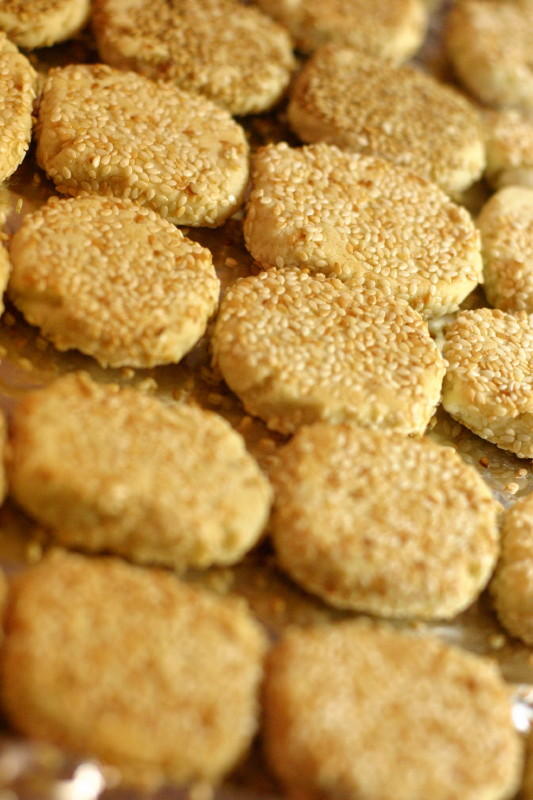
After reading that article, I realized that baking doesn't give a baker that much leeway as cooking do a cook. So I wanted to experiment again. This time I would follow the recipe exactly. I found a recipe from my favorite cooking site and I made these sesame seed cookies. They were putting on a trial at my friend's party last night and turned out to be a success!


Here is Allegro-tested recipe:

1 pound all-purpose flour (3 1/2 cups)
3/4 cup sugar
2 teaspoons baking powder
1/4 pound vegetable shortening
1/4 pound butter
1 large egg
3/4 teaspoon vanilla
1/4 cup water
1/2 cup sesame seeds

In a large bowl or pan, mix together the flour, sugar and baking powder.

Microwave to melt butter. Add along with the shortening to the flour mix and work it in with your hands until well mixed.

Add the eggs and vanilla, and 1/4 cup of water, and work in well. The dough should hold together but not be sticky. If needed, work in a little more water, 1 teaspoon at a time.

Place the seeds in a shallow baking pan.

Preheat the oven to 375 degrees F.

Pinch off a small amount of dough, about the size of a small fist, and cover the remaining dough with a damp dish towel. Roll the dough out into a long rope, about 1-inch in diameter. Cut the dough into 2-inch pieces.

Roll the dough in the seeds, pressing slightly to make them adhere. Place the seeded dough onto a large ungreased baking sheet. Repeat with the remaining dough.

Bake on the bottom rack of the oven until the bottoms are golden brown, about 10 minutes. Turn the cakes over and place the baking sheet on the top rack of the oven to bake for an additional 10 minutes. Remove from the oven and cool on cooling racks.

Serve at room temperature.

Yield: 40 cookies
Prep Time: 40 minutes
Cook Time: 20 minutes


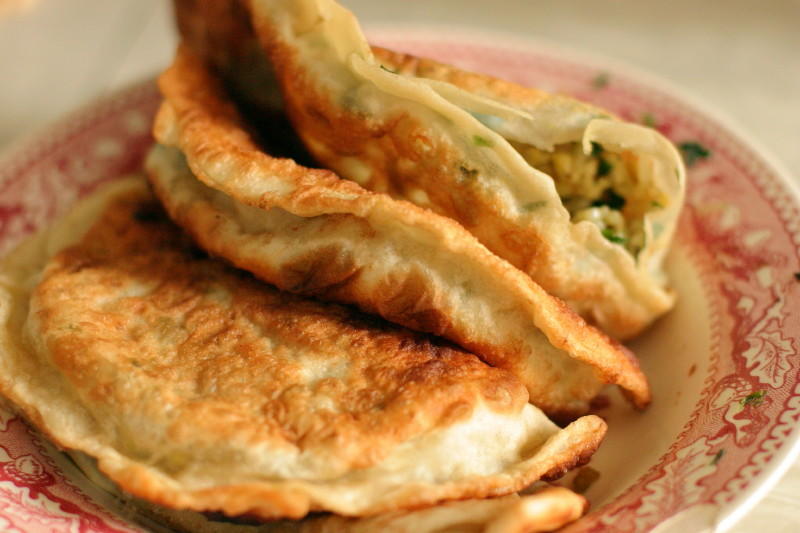
Chinese Chive Pot Pie

这个呢,是本周早些时候第一次做的韭菜盒子。完全是cook风格,用完了所有的粉丝和鸡蛋。经四人数次品尝,评为优秀。“比四川小馆还好!”--Pearl语。

Saturday, October 08, 2005

CNN Offbeat Images 合肥的小猪运动会 及其他


Hogwash

Pigs swim in a pool during a piggy sports contest Wednesday in the Yaohai Park in Hefei, capital of Anhui province in eastern China.

今天看到这么可爱的照片,真为咱合肥骄傲。咱也有这么别出一格的创意。这些小猪的耳朵上都还带着钉,或者那是最新的计时器呢。

瑶海公园在哪里?

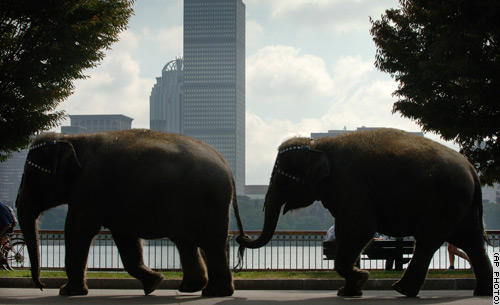
Follow the leader

Circus elephants from Africa saunter beside the Charles River in Cambridge, Massachusetts, as they are led from their trains Thursday to the TD Banknorth Garden in Boston in preparation for the Ringling Brothers and Barnum & Bailey Circus.

这张是我现在的“前院”。就是前天的事儿,我却没看见。可惜了。马戏团的大象从火车站走到剧场。蔚为壮观。

Photos and captions are from CNN.com, Offbeat Images.

Thursday, October 06, 2005

Silkworm Journal II

I am a biologist. My colleagues are biologists. But what we study are tiny molecules (DNA and proteins), and at the best, cells in cell cultures. Thus the first day the silkworms made their debut to the lab, they became our instant stars. They go through so many developmental changes in their short life cycle. We just can't get enough of that. It makes me wonder, how on earth could all the genetic infomation directing all the complicated growth/transformations be packed in such a small nucleus. I just have to marvel at this magic life force.

Soon we learned another lesson from Nature. We had two polls for the silkworms. One was to guess in what order they start spinning. That didn't go well, because we started too late and before everybody could vote, they had already made their cocoons. The second one was to guess the gender of each worm. We had two weeks to decide since it took two weeks for the moths to come out. I'm very proud that I was the only one who got all four worms right. That is a chance of 1 in 16! I didn't really guess. I made an educated guess: since I measured their body weight almost daily, I noticed the growth difference between Worm #1 and the others. It was 1/4 smaller than the others. So I assumed it's male. And it turned to be correct. It could almost make Male #1 and its harem. The guy came out from its cocoon first, and had to wait 2 days for the next female (#4) to come out. Apparantly #1 could hardly wait to mate with #4 when the latter appeared and the mating lasted for a whole day. The second day, #1 was mating with #2, who had been waiting for a whole day for that coupling. That lasted for a whole day, too. Then it was a long, heart-wrenching wait for #3. And she just wouldn't come out. One afternoon we heard the noise she was making. But she didn't come out that day, or the day after. Then I had to go to the Cold Spring Harbor meeting. When I came back, I performed a C-section for #3. It was a sad sight. She was a mutant that wouldn't able to secret the enzyme that digests silk (这可能就是中文里所谓的“作茧自缚”了). She stayed in her cocoon and laid some unfertilized eggs. I tried to revive her, but she was too sick. Even the most ardant Male #1 couldn't coerce her into mating. I was thinking, even if they had produced any progenies, some of them would still have carried the mutant gene. What's the use to force that then? Nature is somehow cruel. This is called the fittest to survive.

So here I write a journal to commemorate my summer pets. I have safely stored their eggs at 4 degrees Celsius, all ready for another generation next Spring. Until then, we can look at some pictures of them:


The Start of a Cocoon
有句词叫“春蚕到死丝方尽”,殊不知它们还有更多更重要的事情要做呢。


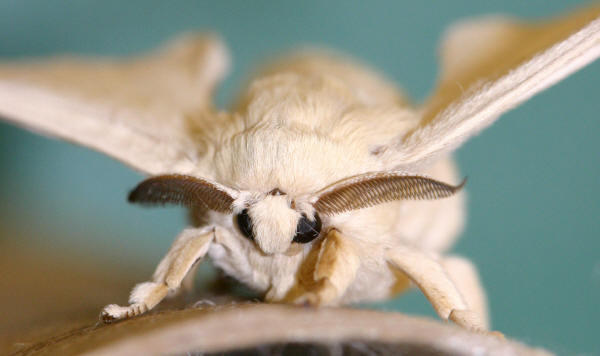
这个可以叫“蛾眉”吧,很像古代仕女的眉。真的很美。

Friday, September 30, 2005

Silkworm Journal I

This summer has been a summer of pets. If we agree that chicken could count as pets, I had been at least pets-free for many, many years. When I visited Yi earlier in August, her two daughters (very cute and lovely girls) showed me shoeboxes full of little white silkworms and cocoons from an earlier batch. Claudia and Danica were very fond of them. They went fetching mulberry leaves regularly. Danica, who was only 4 and a half, posed for my camera with a silkworm on her forehead. When Yi suggested that I take some silkworms and keep them in my lab, I had some hesitation as whether lab people will like them, and whether I could find enough mulberry leaves for them. Yi offered me all the mulberry leaves they had in their refrigerator and also took me to their neighborhood mulberry tree and picked enough leaves for many worms (seemed then). To increase the chance that I get at least a male and a female (there is no physical difference between the worms), she gave me four of them, thus making that probability 7/8.

The following is the correspondence between me and Yi regarding silkworms:

Subject: Silkworm Big Hit!
Date: Tue, 9 Aug 2005 17:27:38 -0400

Yi,

The silkworms are the biggest hit in my lab this year! Everybody goes and watches them several times a day, and Steve said that they were more entertaining than ants (which we used to have as lab pets for two seasons). We googled and figured out that they go through 4 molts to cocoons and so far, the four of them already molted once in our lab! It was really fun watching them walking out of their old skin. It was just like taking off some clothes! Thanks for giving them to me. Also the big supply of the leaves. One labmate found a mulberry tree on her way to T station. So I think we are fine for this season.

Please say Thank you to Claudia and Danica, too.

Date: Aug 10, 2005 11:24 AM
Subject: RE: Silkworm Big Hit!

Nice to hear they are the entertainers for you hard working scientists.
Just a few things in case you don't know. Don't feed them wet leaves. Wipe water off. Before they start spinning cocoons, it is better to put them where they can find corners. Claudia found that the best place for each one of them was the cylinder of tissue or paper towel, Place the cylinder vertically after they start spinning so their pee will come done. By doing so, you will have the best, whitest and highest quality silk! Usually they stay in cocoons for two weeks before the moths come out. Then everything goes as you know--looking for its soul mate, marriage and the rest of the story.


Have fun!

-Yi


Date: Aug 13, 2005 10:30 PM

Yi,

The worms have been eating like crazy. Yesterday morning I weighted them. They were about 2.1g each. This afternoon they each weighted about 3.1g! How the hell could they gain 50% body weight in one day! Totally amazing! They are almost 3 inches long now. How are the worms in your home doing?

My boss found this website the first day I took the worms in.

http://www.wormspit.com/bombyxsilkworms.htm

And I have just checked out other stuff and it is very interesting.

http://www.wormspit.com/index.htm

Take care!


From: Yi
Date: Aug 17, 2005 1:47 PM

Half of my wormies are in cocoons. Yesterday evening, Bob and I spent almost the whole evening watching them spinning and weaving. They are incredible creatures. Unfortunately, a lot of the eggs, if not all, are yellowish which, according to your web site, indicated they were infertilized :-(. I guess it was due to the uneven distribution of genders. So I am waiting for the rest of them. I have six died but still have more than ten left either in cacoon or still are growing and eating as monsters.

Have fun!


Date: Aug 17, 2005 2:52 PM

Yi,

My worms started spinning last night, too! Since I labeled my worms, we could keep track of them. Worm No. 1 was only 3.5gm, but started spinning first. Worm No. 2 was 4.5gm and is just starting right now. Worms No. 3 and 4 are about 4.2gm each and are not ready yet. They are still eating. Everyone was marveled at No. 1 because he made a cocoon just overnight! Oh, No. 2 just peed and pooped! That's some disgusting poop!


From: Yi
Date: Aug 18, 2005 10:41 AM

What a gang of scientific geeks! You weighed and labeled silkworms???


TO BE CONTINUED

Monday, September 26, 2005

Shooting RAW

I have been shooting with a digital camera (or two, or three--forgot about the lab 1Mp HP camera) for five years now. Only two months ago did I start shooting in the RAW format seriously. The reason? I was too lazy to read the user manual. RAW format requires post-shooting processing. I had to learn the software. It takes quite some computational time. And the files are at least two to three times bigger. Thus before I invested enough money in CF cards, I was quite satisfied with my JPEG images, until I saw the result of processed RAW images.

RAW is also called "the digital negative". I know the flexibilities of negatives. I have fond memories of printing from negatives (will write about that later). A RAW file is uncompressed, containing all the information the camera took at the time of picture taking. There are many parameters that you can change when you process a RAW file, such as white balance, contrast, exposure, color tone, etc. That was my knowledge of RAW.

Today I read some technical articles on RAW. Though technical, they were still written for a layman such as me. I found them very informative. If you are interested, here are the links:

Ron Bigelow's articles on RAW: Part I, Part II, Part III.

The following is my 3-point summary of why we should shoot RAW:

  1. Digital camera sensors are linear devices. They only have a dynamic range of 5 to 6 stops. Highlights to mid-tones occupy most of the dynamic range (>75%). (See Table I in Part I)
  2. Human eyes are non-linear devices. Our eyes are more sensitive to shadows than highlights.
  3. JPEG is stored in 8-bit, RAW in 12-bit. Thus RAW conserves more information of shadow areas that appeal to human eyes.

OK, from now on I am going to shoot RAW only.

Sunday, September 25, 2005

田老师的剑桥瞬间

我的高中数学老师田老师前不久从佛罗里达来波士顿旅游。我非常高兴能和老师在异国他乡见面。因为我对位于剑桥市的世界闻名的两所学府比较熟悉,就充当 了导游。参观麻省理工学院时我们走了无限长廊(连接校园主要建筑的走廊,长约400米)。我很想让老师看看这里的教室,于是就进了一间没关门的小教室。我 又怂恿老师摆姿势在黑板前拍照,所以就有了这一幅:


老师说,“我从没想过会有一天来到麻省,还在这里写板书!“

看着曾经烂熟于心的公式,我仿佛又回到了十多年前的田老师的教室。田老师,您知道吗,对于您的所有学生来说,您的课堂就是通往世界知名学府的道路。

Wednesday, September 21, 2005

A Concert at Cold Spring Harbor Laboratory

It is a tradition to have a chamber music concert on the Saturday of our conference, and most other CSHL conferences. This has also become a local attraction for many music lovers from neighboring communities. I heard that CSHL has been keeping good relations with its rich neighbors through different ways (including offering free concerts) in order to do fund-raisers. In any case, it is a very nice thing to be able to attend a good concert.

This time we had a young violinist named Timothy Fain as our soloist. He was indeed very young (and good-looking), yet his music was great. In the 90 minutes long concert, he played Bach’s Partita No. 2 in D minor, Beethoven’s Sonata for violin and piano in A major, and a contemporary piece called Arches by Kevin Puts (born 1972). The concert exceeded my expectation for it was a really good one, and I really enjoyed it.

Bach’s music is simply elegant. The last movement Ciaccona has gone through so many different emotions to arrive at its end. Just beautiful.

Beethoven’s violin sonata in A major is not as famous as his Spring sonata, but just like Mr. Fain introduced, it is very beautiful, almost Schubertanian. Beethoven liked to write music based on simple and short music motifs, and people tend to forget that he was completely capable of writing long, romantic, and beautiful melodies. This violin sonata is a very good example of his other side. The pianist, Ieva Jokubaviciute, was also a very good concert pianist.

I had thought that the third piece would be some kind of music that I won’t be able to enjoy, just because its composer is so young, and I knew how modern music tend to be abstract and empty (sorry, my ears are not adapted to those weird tune systems yet). Much to my surprise, it was a very sweet one. It started slow, with jumping “arches” of notes over the violin strings. Then the speed picked up, getting faster and faster. At some points Mr. Fain was playing very high pitches at a fast pace. That must be very difficult, as a slight shift on the string would make a wrong note. He played it very well.

Mr. Fain gave brief introductions to the music he was going to play. I found this very helpful. As for the audience, most of the locals were elderly. It is a little sad that young people don’t find classical music enjoyable. But at least we have young musicians like Mr. Fain and Ms. Jokubaviciute who love the music they are making and also share this love with their audience.


Timothy Fain


Timothy Fain and Ieva Jokubaviciute

Monday, September 19, 2005

Cold Spring Harbor Laborotory

I went to Cold Spring Harbor Laborotory for a meeting earlier this month. The meeting was very exciting and inspiring, but I still felt sleep-deprived everyday. I only went to the bar on the first night, for a brief 20 minutes, without consuming any alcohol. I don't know how my colleagues and many others managed to go to the bar and grab a couple of beers after evening sessions ended at 11pm and still come to the morning sessions at 9am. No doubt it must be a terrific place to socialize with other scientists attending the meeting, but for someone like me, who can never finish a beer, it seems that's asking too much of myself.

Compared to the last time I went there, this time the food was so much better. Everyday there was a theme for the meals, and I had so much of everything that for a couple days after I came back I only wanted to eat two meals a day. We were treated a banquet for our last dinner there. Lobster was on the menu (one for each person, if you don't object to it). Two graduate students from Oxford were sitting on our table and it was their first time eating a lobster! So we had to tell them where the good parts are.

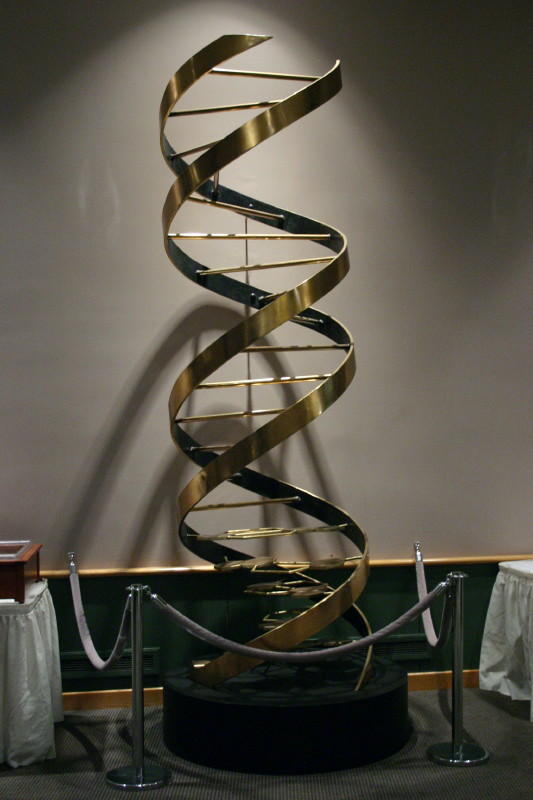
OK, back to the Laborotory itself. CSHL's president and former director, James Watson, is the co-discoverer of the double-helix structure of DNA (along with Francis Crick they won the Nobel Price in 1953). It is no surprise that you shall meet a lot of right-handed double-strands on this campus. The first one you see is the one in the lobby of the Grace Auditorium:

Then you go into the auditorium and you see them on the walls:

The first two are more realistic. The next one, behind Airslie, facing the Outer Harbor, is more artistic:

Other than double-helices, there are also other art objects in the shape of life forms at CSHL. Here is a pavilion. It's top looks to me like a virus particle:
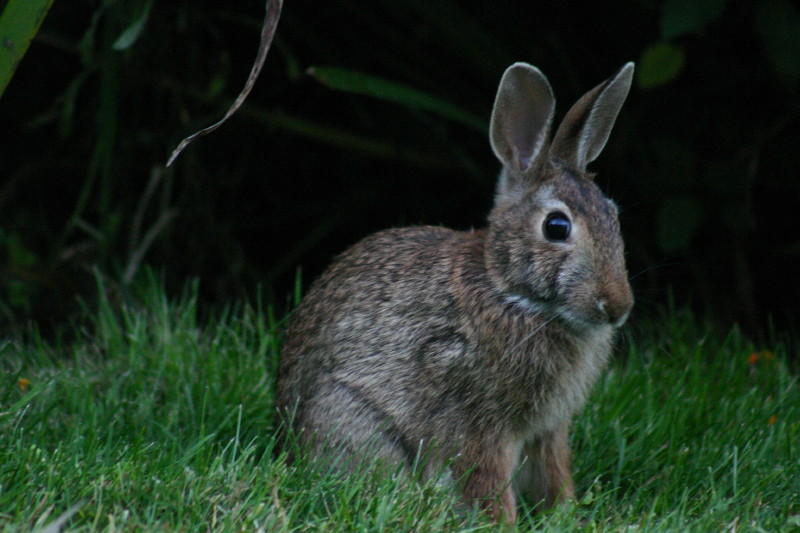
Of course, there are real lives on this campus. One night when we were leaving for our Holiday Inn, we spotted three bunnies on the lawn in front of our car, hiding in the safety of the complete darkness. Here is one bunny at dusk, not being shy at all:

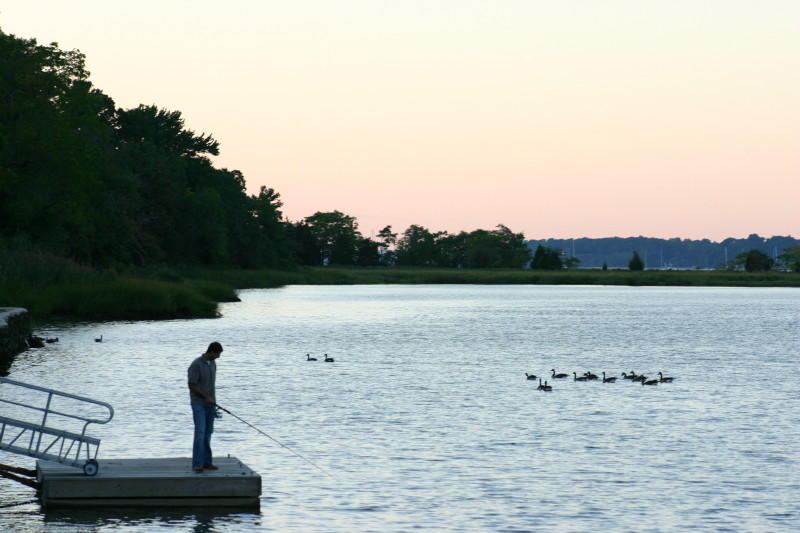
There are also ducks etc. and people are fishing here in the Inner Harbor:


There are many interesting sculptures, too. This one is a small fountain behind Airslie, in the shape of a chubby child holding a water basin:

This one is called Oak Tree II: (haven't found Oak Tree I anywhere)

This one is titled Getting There. The chrome top part swings in the wind.

People here can enjoy not only arts, but also water sports. There is a beach with life guards in the Outer Harbor. These researchers had just taken out a boat for some rowing in the afternoon.

Saturday, September 17, 2005

Harry Potter and the Teaching of Genetics to Children

I am a Harry Potter fan. Like millions of other Harry Potter fans, this July I went to a book store on the first day and got a copy of the sixth installation. I really enjoyed reading those books and was fascinated by J.K. Rowling's imaginations.

I am also a biologist, thus it is quite interesting reading two recent correspondences in the top scientific journal Nature. The first one was published by a group of scientists from Australia. The title of their letter is "Harry Potter and the recessive allele". They argued that it would be easier to teach children genetics if we could use analogies to things they are interested in, for example (what a surprise), Harry Potter. So they went on and discussed the allel for wizards and muggles, also about pure-blood, half-blood, muggle-born and so on. I think this is a little too much, but still is fine. Yet I am a little confused at why this idea merits a publication in Nature.

Then this Thursday, a second correspondence (Harry Potter and the prisoner of presumption) came out. This time a group of British scientists expressed their disagreement with the first group's assumption that the ability of wizarding is a monogenic trait, in which wizarding allel (w) is recessive to muggle allel (M). And their so-called "available evidence" is the characters Hermoine and Naville. I can't help bursting out laughing. Come on, my fellow scientists, can't we talk about something more solidly scientific in Nature?

Four Hours in New York City

My last post made me look kind of small. It seemed that I only worried about gas price that directly affected me when such a severe natural disaster had brought so much misery to the poor people down south. At the time when I wrote it, no one knew exactly how bad the situation was in New Orleans. Since then we saw how people suffered in the following days in a trapped city. My sympathy went to them.

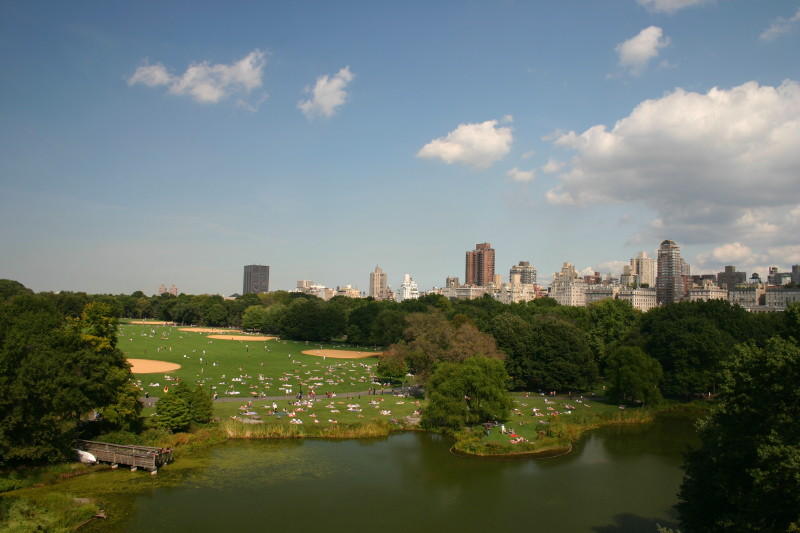
I have been too busy recently to post anything. Last week I went to a science conference in Cold Spring Harbor Laboratory. On my way back to Boston, I took a detour to NYC and spent 4 hours there. I walked in Central Park and on the 5th Avenue. New York is a busy city. There were a lot of people in Central Park, participating in all sorts of activities: sun bathing, dancing, jogging, drawing, sightseeing, and dog-walking.


People enjoying the afternoon sun on the Great Lawn in Central Park. The guy on left was looking up at something in the sky and it was:


Writings in the sky. Five small airplanes had been circling the city and writing advertisements in the sky. Unfortunately the writings dissipate very quickly, but I did see that one ad was for GEICO, an insurance company.


Again, Central Park, the Great Lawn. I am on the observatory, looking towards northeast.


Abercrombie & Fitch Store, Fifth Avenue. It’s under renovation. But the door in that place???


Fashion of (not sure about the store name). Definitely fashion of money. I couldn't get rid of the reflection on the window even with a circular polarizer filter!


Cathedral of St. Patrick’s, interior. People are arriving for Mass. Oops, didn't hold my camera absolutely horizontal.


Cathedral of St. Patrick’s, painted window